 We explore the legacy of Elsa Schiaparelli ahead of a new exhibition on the surrealist Parisian designer.


Crafting art from fashion
We explore the legacy of Elsa Schiaparelli ahead of a new exhibition on the surrealist Parisian designer.
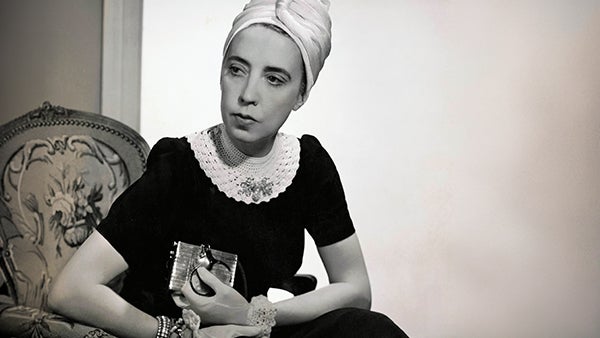
Think of the great fashion designers of the 20th century. Who springs to mind? Coco Chanel, of course. Christian Dior, Cristóbal Balenciaga, Yves Saint Laurent. How about Elsa Schiaparelli? The Italian-born designer had her heyday in Paris in the 1920s and ’30s and was celebrated for her trompe l’oeil knitwear, avant-garde designs and work with surrealist artists, such as Salvador Dalí and Jean Cocteau. But her collections failed to recapture the post-war limelight and her business closed in 1954.
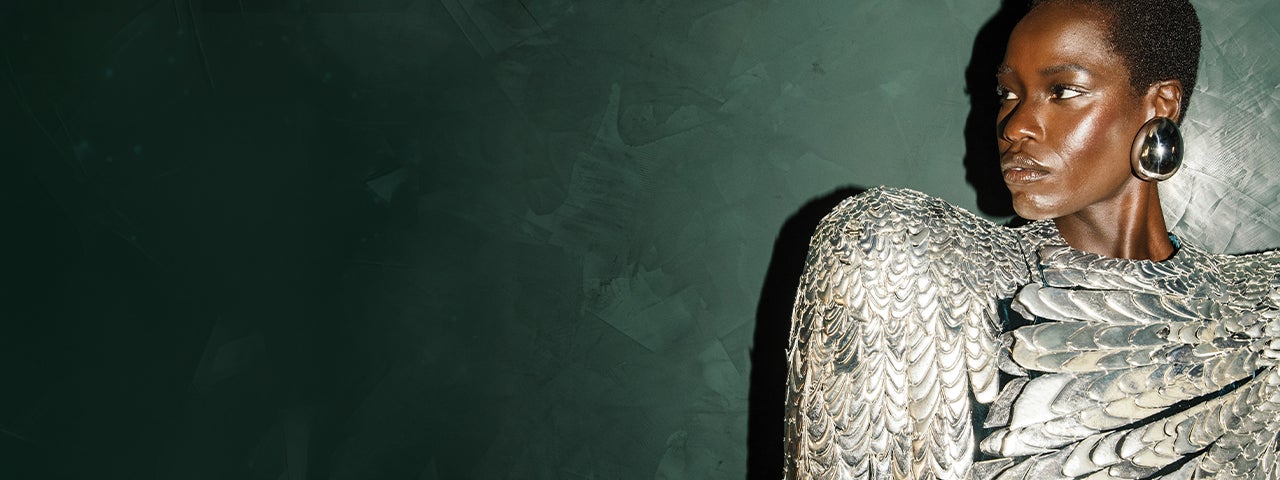
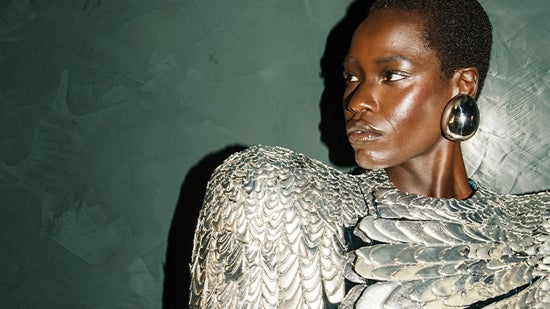
It wasn’t until American fashion designer Daniel Roseberry took the helm in 2019 the Schiaparelli name was reignited in the public imagination once again, with his sumptuous couture and ready-to-wear creations reinterpreting Schiaparelli’s radical codes for a new audience.
This spring, London’s Victoria & Albert Museum plays host to the maison with a headline exhibition — a slot previously graced by the likes of Chanel and Balenciaga. Schiaparelli: Fashion Becomes Art will chart the history and impact of the designer, tracing the origins of her house from its first, paradigm-shifting garments through to its present-day incarnation in the hands of Roseberry.
“Elsa Schiaparelli redefined fashionable taste and perceptions of beauty in the 20th century,” explains Sonnet Stanfill, Senior Curator of Fashion at the V&A. “She left an enduring mark on the world of fashion and a creative legacy that combines wit, surprise and surrealist sensibilities, and through her work with artists, a blurring of the boundaries between art and fashion.”
Schiaparelli, who was born in 1890 in the Corsini palace in Rome, had a rich upbringing in the heart of the Italian beau monde, the influences of which can be traced across her work. She first caught the attention of the world’s fashion press in the 1920s when her trompe l’oeil bow jumper, knitted by Armenian women in Paris, made waves. It was called “an artistic masterpiece” by Vogue, and in 1928, The New Yorker named her “the owner of knit”.
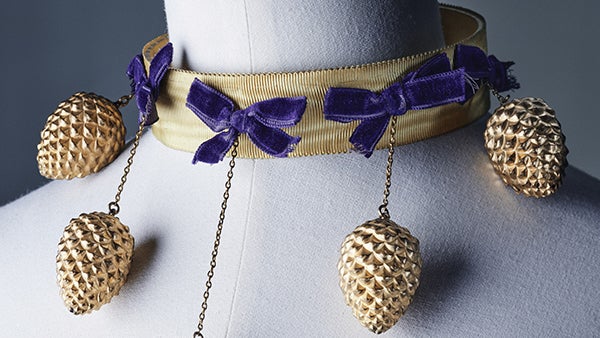
Her creations combined practicality with flights of fancy bordering on the surreal: a “speakeasy” coat that concealed a flask in its bustle for American clients at the height of Prohibition; gloves you could strike a match on; and garments that were reversible and transformable, often from day to night. She invented her own colour and named it shocking pink and was the first high-fashion designer to embrace the zips. Motifs of faces, hands, eyes, lips, animals and birds became her signature.
“Schiaparelli can be considered a wild card in a good way,” says fashion editor Shelcy Joseph. “She not only did away with all sorts of conventions, but she also added this element of fantasy into fashion.”
The V&A exhibition will feature her famous Skeleton Dress, on which bones are suggested with 3D padding – and the trompe l’oeil Tears Dress, which gives the illusion of ripped clothing, created in 1938 as part of her collaboration with Dalí.
“Schiaparelli created a freedom and radicalism in fashion which subsequent generations of disobedient fashion designers can claim as their lineage,” says Stanfill. “Today, her legacy of rule-breaking fashion is fundamentally connected to the fact she encouraged her clients to dare to dress differently, to dress in a way that demanded people look twice.”
As well as her partnership with Dalí, artworks by Pablo Picasso, Jean Cocteau and Man Ray will also be on display, underlining Schiaparelli’s lasting connection with the Paris art world in the interwar years.
“The traditional narrative of Schiaparelli is often that she capitalised on surrealism and saw it as a trendy thing and a way to sell clothing,” explains fashion historian Dr Victoria Pass. However, she thinks the designer’s engagement with the artistic movement was actually much deeper than that.
“There was something slightly different about the way that she was using ideas to push forward her designs – almost thinking of fashion as an art form rather than just a clothing form,” continues Dr Pass.
Stanfill agrees. While researching Schiaparelli for the exhibition, she and her colleagues uncovered new information about her work with artists. It showed that she was an active protagonist in the surrealist movement. “Dalí considered her premises on Place Vendôme as the beating heart of surrealist Paris,” says Stanfill.
This could be seen in her many collaborations with the artists of the day, to her highly conceptual fashion collections, which included the Pagan Collection, the Zodiac Collection and Circus Collection, as well as her theatrical presentations. In 1937, her contribution to the Pavillon d’Elégance, which featured creations from Paris’ leading couturiers at the time, was a naked mannequin, which people mistook to be a corpse, reclining on a bed of flowers and holding a pair of gloves in one hand, while a floral evening dress and high heels were placed nearby. The effect explored ideas of the uncanny and the surreal, as well as death and destruction, as the spectre of war loomed over Europe.
Schiaparelli also sought to challenge how women were expected to dress and act. “She did away with this idea of the one-dimensional woman,” says Joseph. “She did not like this idea of fitting in – she herself was really bold and encouraged women to seek attention and not shy away from it. A lot of her work is about freeing women from the restrictions that were placed on them.”
Although she dressed everyone from Wallis Simpson to Marlene Dietrich and Mae West, she was also embraced by women who did not fit the conventional model of femininity. “Her clients were often singular women who embraced a way of dressing that was slightly transgressive, disobedient and made people look twice,” says Stanfill.
The women who were drawn to her clothes and exemplified her aesthetic were not conventionally pretty, adds Dr Pass. “They were what the French called jolie-laide. They were unusual-looking women, like [fashion editor] Diana Vreeland, [socialite] Millicent Rogers and [actress] Tallulah Bankhead.”
Part of the reason for this is that she thought about clothing as armour for women, says Dr Pass. “That was a somewhat unique notion at that time – thinking about arming her wearers for the modern world and giving them kind of like a protective shell. It was a pretty avant-garde idea at that time.”
Schiaparelli’s singular approach to design had a lasting impact on the fashion world, and her radical ethos of fashion-as-art shaped many designers after her. “You can think about Schiaparelli as the first punk,” says Stanfill. “Putting a raised skeleton on the surface of a dress was a declarative, disruptive statement. From there, you can fast forward to other iconoclasts such as McQueen or even JW Anderson.”
Her use of fashion as humour can also be seen in the work of designers like Viktor & Rolf and Jeremy Scott at Moschino. “I like to amuse myself through some of my creations. If I didn’t, I should die,” Schiaparelli once said.
As an entrepreneur and businesswoman, Schiaparelli also helped to create the model for the modern fashion house, with its perfume and make-up lines, celebrity partnerships and viral moments. Unfortunately, the impact of her designs waned in the austere years after the Second World War. “There wasn’t as much room for the sense of play,” says Joseph. “It was seen as gauche – ‘Look at me in this ornate embroidery.’ It could have been viewed as insensitive.”
Creations from the House of Schiaparelli will also be on display at the V&A, where under Roseberry’s stewardship he dresses the likes of Cynthia Erivo, Lady Gaga and Ariana Grande, as well as stage costumes for Beyoncé and Dua Lipa. Next year marks 100 years since Schiaparelli created her very first trompe l’oeil jumper, and in doing so radically changed the course of fashion history forever. Hers may not be a household name, but her influence lives on today.